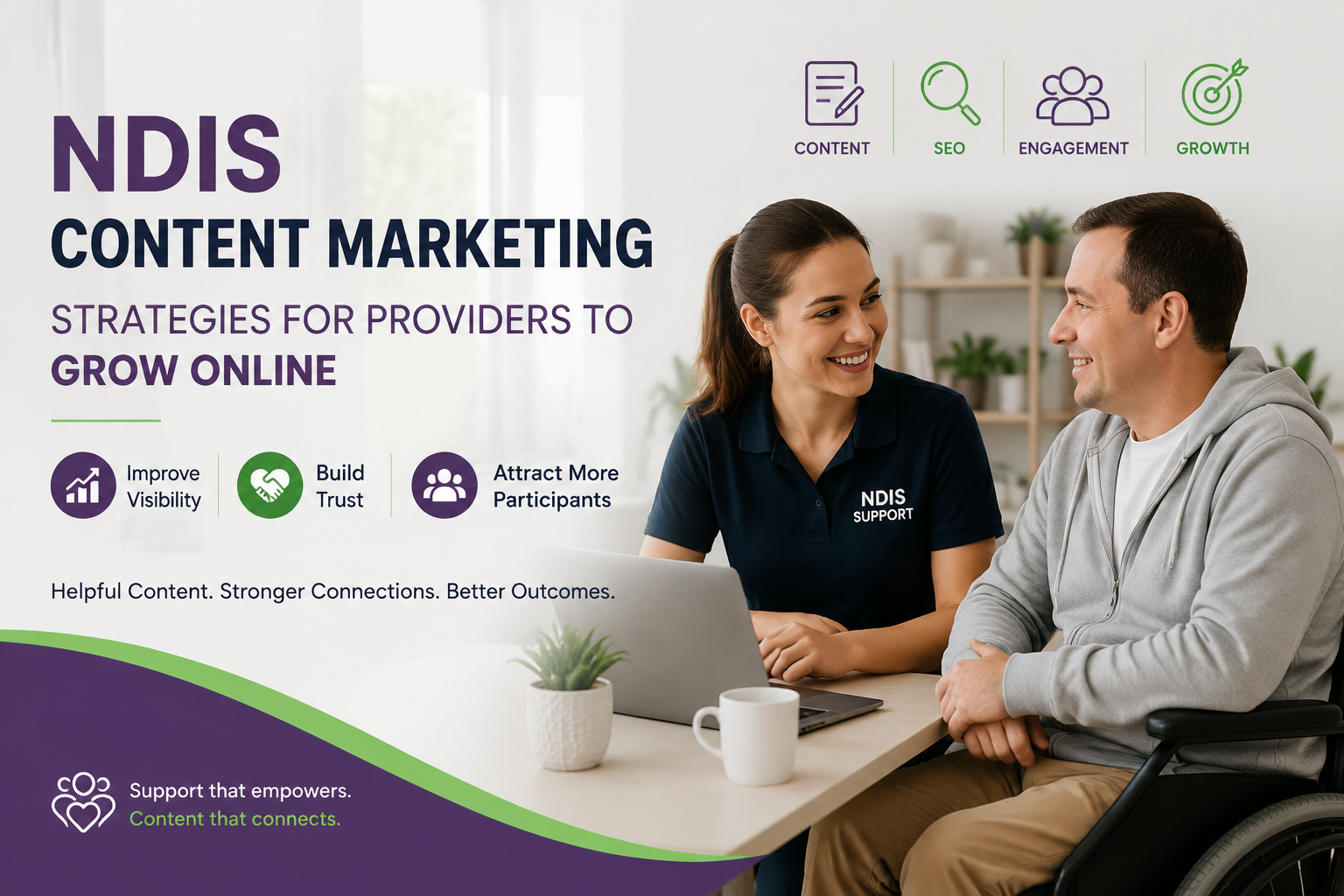
The NDIS sector is becoming increasingly competitive, and having a professional website alone is no longer enough. NDIS providers need effective content marketing strategies to build trust, improve search visibility and connect with participants who are looking for reliable support services.
NDIS content marketing helps providers share valuable information, demonstrate expertise and create stronger relationships with participants, families and support coordinators.
By publishing useful, search-focused content, NDIS providers can improve their online presence while making it easier for people to understand their services.
What Is NDIS Content Marketing?
NDIS content marketing is the process of creating and sharing helpful online content specifically designed for NDIS participants, families and referral partners.
Unlike traditional advertising, content marketing focuses on providing information that answers real questions and supports people during their decision-making journey.
For NDIS providers, this can include:
- Website service pages
- Educational blog articles
- Participant guides
- Frequently asked questions
- Case studies
- Local area content
- Social media content
A strong content strategy helps providers become a trusted source of information while improving organic search performance.

Why Content Marketing Matters for NDIS Providers
1. Build Trust with Potential Participants
Choosing an NDIS provider is an important decision. Participants and families want to work with organisations that understand their needs and provide reliable support.
Helpful content allows providers to showcase:
- Their experience
- Their support approach
- Their service areas
- Their values and commitment
High-quality content creates confidence before someone makes an enquiry.
2. Improve Google Rankings with SEO Content
Search engines reward websites that provide useful, relevant information.
By creating content around topics people search for, NDIS providers can increase their chances of appearing in Google search results.
Examples include:
- How does NDIS support coordination work?
- What services can NDIS participants access?
- How to choose an NDIS provider?
- NDIS support services in Sydney or Melbourne
Well-optimised content helps attract visitors who are actively looking for disability support services.
3. Generate More Website Enquiries
Content marketing is not only about increasing traffic. The goal is to attract the right visitors and encourage them to take action.
Effective NDIS website content should include:
- Clear service information
- Simple navigation
- Strong calls to action
- Easy enquiry options
When visitors find useful answers on your website, they are more likely to contact your team.
Effective Content Marketing Strategies for NDIS Providers
1. Create Location-Based NDIS Content
Local SEO is extremely important for NDIS providers because many participants search for services in their area.
Examples:
- NDIS provider in Sydney
- Disability support services in Parramatta
- NDIS support worker in Melbourne
Creating local content helps providers connect with nearby participants and improve local search visibility.
2. Write Educational Blog Articles
Blog content allows providers to answer common participant questions and demonstrate industry knowledge.
Useful blog topics include:
- Understanding your NDIS plan
- Preparing for your first support service
- Benefits of personalised disability support
- How occupational therapy supports independence
Consistent publishing helps build website authority over time.
3. Optimise Content for Search Intent
Successful NDIS content should match what users are actually searching for.
Instead of writing general articles, focus on specific questions and needs.
For example:
Less effective:
“About Disability Support”
Better:
“How NDIS Disability Support Helps Participants Live Independently”
Search-focused content attracts visitors with stronger interest and higher conversion potential.
4. Use Trust-Building Content
NDIS participants need confidence before choosing a provider.
Trust-building content can include:
- Team introductions
- Provider experience
- Service process explanations
- Participant testimonials
- Frequently asked questions
This type of content improves credibility and helps visitors make informed decisions.
How SEO and Content Marketing Work Together
Content marketing and SEO work best when combined.
SEO helps people find your website, while content helps them understand your services and take action.
A successful NDIS content strategy includes:
- Keyword research
- Helpful website content
- Technical SEO optimisation
- Internal linking
- Regular updates
Together, these elements create long-term online visibility.

Common Content Marketing Mistakes NDIS Providers Should Avoid
Creating Content Without a Strategy
Publishing random articles without keyword research often produces limited results.
Each piece of content should have a clear purpose, target audience and search goal.
Using Generic Content
Generic disability support content may not stand out online.
Content should highlight your specific services, locations and expertise.
Ignoring Local SEO
Many NDIS searches are location-based. Without local content, providers may miss valuable enquiries from nearby participants.
How Professional NDIS Content Marketing Helps Providers Grow
A professional content marketing strategy helps NDIS providers:
- Increase Google visibility
- Build online credibility
- Reach more participants
- Generate quality enquiries
- Strengthen their digital presence
With the right approach, content becomes a valuable long-term asset that continues attracting potential participants.

Conclusion
NDIS content marketing is an essential strategy for providers looking to grow in an increasingly digital environment.
By creating useful, SEO-friendly content that answers participant questions, providers can improve visibility, build trust and attract more enquiries.
A strong content strategy combines quality information, local SEO and user-focused website experiences to support sustainable online growth.

FAQ
NDIS content marketing involves creating helpful online content to educate participants, improve search visibility and promote disability support services.
Content marketing helps providers build trust, improve Google rankings and attract people searching for disability support services.
Publishing useful content regularly, such as monthly blog articles, can help improve website authority and maintain online visibility.
Yes. SEO-focused content helps search engines understand your website and improves opportunities to rank for relevant keywords.
Educational articles, local service pages, FAQs and participant-focused guides are effective content formats for NDIS providers.